
 Available in US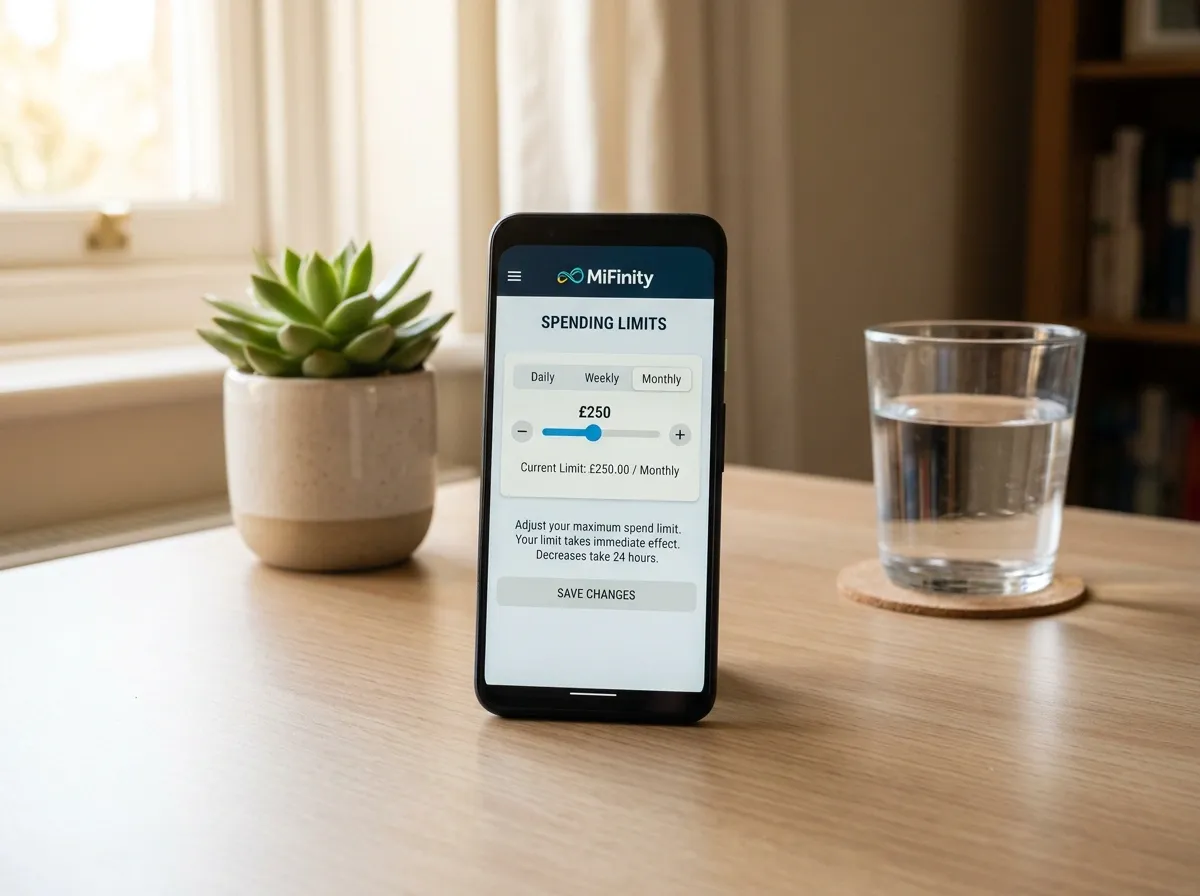
Contents
Payment Tools as a Line of Defence Against Problem Gambling
Overall gambling participation in Australia actually declined to 58.8% in 2025. That sounds like progress until you read the next number: the rate of risky gambling among those who do participate surged from 13.7% in 2024 to 19.4% in 2025. Fewer Australians are gambling, but those who gamble are doing so more dangerously. That shift changes the conversation from “how many people bet” to “how much harm is being done to those who do.”
In nine years of working in payment compliance, I have come to see the payment layer as an underused intervention point. Sportsbooks apply responsible gambling tools at the betting stage – deposit limits, reality checks, session timers. But the payment provider sits upstream. If you can control the money before it reaches the sportsbook, you add a layer of defence that operates independently of any single operator. MiFinity is not a responsible gambling charity, but its wallet features include controls that function as practical harm-reduction tools when used deliberately.
BetStop – Australia’s national self-exclusion register – recorded 59,830 total registrations by 31 March 2026, with 37,247 active exclusions. Those numbers represent real people trying to change their behaviour, and the payment ecosystem has a role in supporting or undermining that effort.
How BetStop Works Alongside E-Wallet Payments
BetStop is a centralised register where Australian gamblers can voluntarily exclude themselves from all licensed wagering operators. Once registered, every licensed Australian bookmaker is legally required to close your active accounts and refuse new registrations. The register launched in 2023, and uptake has been significant – 4,971 new registrations in Q3 of the 2025-2026 financial year alone, with New South Wales leading at 18,601 total registrations since launch, followed by Victoria at 16,063 and Queensland at 12,310.
Lifetime self-exclusion is the most popular choice, selected by 39% of registrants. The next most common options fall in the three-month to two-year range, chosen by 38%. These are not casual decisions – they reflect genuine intent to stop gambling for meaningful periods.
The critical limitation: BetStop only binds licensed Australian operators. Offshore sportsbooks are not required to check the register, and most do not. This is where payment tools become relevant. If you are registered with BetStop and trying to maintain your exclusion, your MiFinity wallet can still process deposits to offshore sites that ignore the register. The wallet itself does not check BetStop – it is a payment processor, not a gambling regulator. Understanding this gap is important for anyone relying on self-exclusion as their primary harm-reduction strategy.
The industry discussion around closing this gap is ongoing. Some advocates argue that payment providers should be required to screen transactions against self-exclusion registers before processing deposits to gambling merchants. Others counter that this would require payment providers to identify which merchants are gambling-related in real time – a classification challenge that gets complicated when offshore operators deliberately obscure their merchant category codes. As of 2026, the responsibility remains split: BetStop handles the operator side, and payment-level controls are left to the individual user.
From 2027 the marketing side changes too: the advertising reform.
Setting Deposit and Spending Limits Within MiFinity
The Lancet Public Health Commission on Gambling estimated that approximately 450 million people globally experience gambling-related harm, with around 80 million suffering from a gambling disorder. Heather Wardle and her co-authors on the Commission called for what they described as a serious and sustained effort to apply public health logic as countries respond to the rapidly increasing threat of gambling harms. At the individual level, one of the most practical applications of that logic is controlling how much money can flow from your bank account to a sportsbook.
MiFinity allows users to set wallet-level controls on their accounts. You can manage your loaded balance to function as a natural spending cap – only funding the wallet with what you are prepared to lose in a given period. Unlike sportsbook-imposed deposit limits, which apply per operator, a wallet-level cap covers all sportsbooks you use through MiFinity. If you bet at three different sites, a $200 weekly wallet load limits your total across all three, not $200 per site.
This approach requires self-discipline since you are setting and enforcing your own limits, but it offers an advantage over operator-side controls: no single sportsbook needs to know about your total gambling spend across other platforms. Your MiFinity wallet provides a single point of visibility into your total outflow to all gambling merchants. Reviewing your MiFinity transaction history weekly gives you a clearer picture of your real spending than checking each sportsbook account individually.
For punters who want external reinforcement, combining MiFinity wallet management with BetStop registration and sportsbook-level deposit limits creates a layered system. No single control is foolproof, but three independent layers – payment-level, register-level, and operator-level – are significantly harder to circumvent than one. For more on how offshore operators undermine these protections, I have covered the risks in the offshore betting sites guide.
Australian Gambling Support Resources
If you or someone you know is struggling with gambling, support is available and free. Gambling Help Online provides 24/7 counselling via phone, chat, and email. The national helpline number is 1800 858 858, and it connects callers with trained counsellors who specialise in gambling-related harm.
Each Australian state and territory also operates its own gambling support services with localised programs. Financial counselling services can help with debt management arising from gambling losses. These services are confidential and available to anyone – you do not need to meet a clinical threshold to reach out.
The payment side of gambling – watching money leave your account, chasing losses with progressively larger deposits, rationalising the next top-up – is often where the problem manifests most visibly. If reviewing your MiFinity transaction history produces anxiety rather than information, that reaction is worth paying attention to. Professional support exists precisely for this moment, and accessing it is not weakness. It is the most rational decision you can make.
Does registering with BetStop block MiFinity transactions at all betting sites?
BetStop registration blocks your accounts at licensed Australian operators only. Offshore sportsbooks are not legally required to check the BetStop register, and most do not participate. MiFinity as a payment provider does not independently check BetStop, so wallet-to-merchant deposits to offshore sites can still process even if you are registered.
Can I set daily spending limits on my MiFinity wallet?
MiFinity allows you to manage your wallet balance as a practical spending cap by loading only what you are prepared to spend. This wallet-level approach covers all sportsbooks you transact with through MiFinity, unlike operator-imposed limits which apply per site. Review your transaction history regularly to monitor total gambling outflow.
What support resources are available for Australian problem gamblers?
Gambling Help Online provides free, confidential 24/7 support via phone (1800 858 858), chat, and email. Each state and territory offers additional localised services. Financial counselling is also available for managing gambling-related debt. These services are available to anyone, regardless of the severity of the issue.
The natural way in is our complete guide for Australian punters.
