
MiFinity Betting in Australia: The Complete Guide to E-Wallet Sports Wagering
 Available in US
Why Australian Punters Are Switching to MiFinity
Nine years in e-wallet integration and I still remember the exact moment MiFinity stopped being "that other option" on my radar. It was mid-2024, weeks after Australia's credit card gambling ban took effect, and I watched transaction volumes through alternative payment channels spike in ways I hadn't seen since the early days of Skrill. Operators scrambled. Punters scrambled harder. And right in the middle of that chaos, one digital wallet kept processing without a hiccup.
That wallet was MiFinity — an FCA-regulated e-wallet that had been quietly building its iGaming infrastructure since 2002 under the NXSystems brand. By 2025, it had crossed the one-million-account milestone and integrated with over 1,200 betting and gaming brands worldwide. For Australian bettors, those numbers matter because they translate into real coverage: more sportsbooks accepting your deposits, more withdrawal routes back to your bank, and fewer dead-end payment screens at checkout.
MiFinity is a digital wallet (e-wallet) regulated by the UK's Financial Conduct Authority and Malta's MFSA. It lets you store funds, send payments to sportsbooks and casinos, and receive withdrawals — all without sharing your bank card details directly with the operator. Available in 225 countries, supporting 18 currencies and over 80 funding methods, it functions as a buffer layer between your bank and the betting site.
eWallet — a digital account that holds funds electronically, allowing you to deposit and withdraw at online sportsbooks without exposing your bank details to the operator.
KYC (Know Your Customer) — identity verification required by financial regulators. MiFinity and sportsbooks each run their own KYC checks, so you may need to verify twice — once with the wallet, once with the bookmaker.
Australia's online gambling market hit USD 5.5 billion in 2025 and is projected to reach USD 9.0 billion by 2034 at a compound annual growth rate of 5.67%. That growth is happening alongside tighter regulation — a credit card ban, the BetStop national self-exclusion register, and a sweeping advertising reform set to take effect in January 2027. The payment landscape is shifting in parallel, and e-wallets sit at the centre of that shift. Kris Deyanov, MiFinity's Head of Business Development, framed it bluntly: the future of payments in iGaming will be defined by flexibility, greater localisation, and speed — and increasingly, that model is the one winning the race.
This guide is built for Australian punters who are either already using MiFinity or weighing it against the alternatives. I'll walk through the regulatory environment, how the wallet works in practice, what it costs, how it compares to Skrill and Neteller, what to look for in a sportsbook that accepts it, and the responsible gambling tools that tie into the payment layer. No promotional fluff — just the analysis I'd give a colleague asking where to park their betting bankroll.
The Quick Brief for Time-Poor Punters
- Australia's online betting market hit USD 5.5 billion in 2025, with e-wallets filling the gap left by the June 2024 credit card ban. MiFinity — FCA-regulated, 1,200+ sportsbook integrations, 18 currencies including AUD — is built specifically for iGaming payments.
- Deposits from a funded MiFinity wallet reach sportsbooks in minutes. Withdrawals take 12-48 hours operator-side, plus 1-3 days to reach your bank.
- Fees depend on funding method (AUD 1-2 for debit card loads) and whether currency conversion is involved. The MiRewards loyalty programme, launched February 2026, offers partial offset through transaction-based points.
- MiFinity vs Skrill vs Neteller is not a clear-cut winner. MiFinity leads on iGaming focus and eVoucher support; Skrill leads on sportsbook acceptance breadth.
- Always verify your sportsbook's licence independently — 44% of Australian online gamblers can't distinguish licensed operators from offshore sites, and MiFinity's presence at a sportsbook is not a guarantee of legitimacy.
The Australian Online Betting Landscape in 2026
I pulled up the latest market reports last month and the numbers still caught me off guard. Australia's sports betting segment alone generated USD 7.32 billion in revenue in 2025, with projections pushing toward USD 8.36 billion by 2030. The online share of that is dominant — nearly 80% of all sports betting revenue in 2024 came from digital channels, according to Grand View Research data. This is not a market tiptoeing toward digital. It sprinted there years ago.
What makes the Australian market unusual isn't its size — it's the intensity of participation. User penetration in the overall gambling sector sat at 77.8% in 2025, translating to roughly 23.6 million projected users by 2030. The average revenue per user in sports betting reached USD 924.82, one of the highest figures globally. More than half of all playing Australians — 56.1% in 2025 — gamble predominantly online, a proportion that has only increased since the pandemic years.
Horse racing remains the backbone of Australian wagering, accounting for 37.9% of all betting revenue in 2025. Fixed-odds formats take 41.6% of total turnover — a format that pairs naturally with the instant deposit and withdrawal capabilities of e-wallets.
The demographic profile matters here too. The 25-44 age group represents the largest segment of online bettors, but the 18-24 cohort is growing steadily, driven by mobile-first habits and comfort with digital payment tools. These younger punters didn't grow up with TAB counters and cheque payouts — they expect tap-to-pay speed and app-native experiences. That expectation is reshaping how operators structure their payment pages, and it explains why e-wallet adoption keeps climbing.
But the growth story has a shadow. Overall gambling participation actually dropped to 58.8% in 2025, which sounds like progress — until you look at the risk data. The proportion of Australians classified as at-risk gamblers jumped from 13.7% in 2024 to 19.4% in 2025 according to ANUpoll research. Fewer people gambling, but those who do are gambling harder. That tension between market expansion and harm escalation is the defining challenge for regulators, operators, and the payment providers that connect them.
This is the environment MiFinity operates in: a large, digitally mature, heavily regulated market where the rules keep tightening and the demand for fast, secure, non-card payment options keeps growing.

Credit Card Ban, BetStop, and the 2027 Ad Reform
I was on a call with an operator's compliance team on 11 June 2024 — the day the credit card and cryptocurrency ban for online gambling officially kicked in. Within hours, their deposit conversion rate dropped by double digits. The ban carries penalties of up to $247,500 for operators who violate it, and it was explicitly designed to stop Australians gambling with money they don't have. Communications Minister Michelle Rowland put it in plain terms: Australians should not be gambling with money they do not have.
Important: Since 11 June 2024, Australian licensed operators cannot accept credit cards or cryptocurrency for online gambling deposits. Debit cards remain permitted. E-wallets funded by debit card or bank transfer are compliant — but an e-wallet funded by credit card would violate the intent of the ban.
The credit card ban didn't just remove a payment option — it restructured the entire deposit funnel. Punters who had relied on Visa or Mastercard credit lines suddenly needed alternatives. Bank transfers work but are slow. POLi has availability questions. E-wallets, already a growing share of Australian online payments, became the natural landing zone. MiFinity, Skrill, and Neteller all saw increased interest from AU-facing operators in the months that followed.
Then there's BetStop. Australia's national self-exclusion register had accumulated 59,830 total registrations by 31 March 2026, with 37,247 of those still active. New South Wales leads with 18,601 registrations since launch, followed by Victoria at 16,063 and Queensland at 12,310. The most popular exclusion period? Lifetime, chosen by 39% of registrants. BetStop operates at the operator level — if you're registered, licensed sportsbooks must refuse your bets. But it doesn't reach offshore sites, a gap that has real consequences I'll address later.
The newest regulatory layer is the gambling advertising reform announced on 2 April 2026, set to take effect 1 January 2027. Prime Minister Anthony Albanese framed it as getting the balance right — letting adults have a punt while making sure Australian children don't see betting ads everywhere they look. The reform bans gambling advertising during sports broadcasts, prohibits stadium signage, bars the use of celebrities in betting promotions, and caps operators at three ad spots per hour between 6:00 AM and 8:30 PM. The government's own impact analysis estimates these restrictions will reduce gambling expenditure by just 0.8% — roughly $62.7 million per year. A full ban was considered but rejected.
For punters, the practical effect is that discovering new sportsbooks through traditional advertising channels will become harder. That makes payment-led discovery — finding operators through the e-wallet ecosystem itself — a more relevant path.
Regulation is tightening the boundaries of how Australians bet and how they fund those bets. Understanding the wallet that sits at the centre of this shift — MiFinity itself — is the next step.
How MiFinity Works for Sports Betting
A question I get asked constantly: why would I add another account between my bank and my sportsbook? The short answer is that a buffer layer gives you speed without exposure. You load funds into MiFinity once, then distribute them across multiple betting sites without handing each one your bank card number. When you win, the money comes back to the wallet — not scattered across five different operator withdrawal queues tied to your debit card.
MiFinity has been operating in the payments space since 2002, originally under the NXSystems brand before rebranding. It's not a startup experimenting with iGaming on the side — betting and gaming transactions are its core business. Paul Kavanagh, MiFinity's CEO, acknowledged as much back when the platform crossed 1,000 brand integrations: the company's growth over the preceding two years had put MiFinity firmly on the map and was threatening many incumbent players in the iGaming payments market. By 2025, that number had surpassed 1,200 integrations, with clients including names across sports betting, poker, and casino verticals.
Countries
225
Currencies
18 (including AUD)
Funding Methods
80+
Languages
21
User Accounts
1 million+ (as of March 2025)
Brand Integrations
1,200+
The wallet itself comes in four operational categories — Gaming, Forex, Travel, and eCommerce — though for Australian bettors, the Gaming category is what matters. Within that category, MiFinity handles the full transaction loop: bank-to-wallet funding, wallet-to-sportsbook deposits, sportsbook-to-wallet withdrawals, and wallet-to-bank cashouts. Each step can involve a different funding method — debit card, bank transfer, or the eVoucher system that lets you load funds without linking a card at all.
eVoucher — a prepaid code purchased with cash or debit that credits your MiFinity wallet. Useful for punters who want to fund their betting without a bank card on file. Not all sportsbooks accept eVoucher-funded wallets for withdrawals, so check before you deposit.
One feature that flew under the radar until recently is MiRewards, MiFinity's loyalty programme launched in February 2026. It has four tiers — Classic, Exclusive, Signature, and Elite — and earns points on transactions you're already making. CEO Paul Kavanagh described it as a simple, transparent way to give back to customers for the transactions they already make. Whether the reward structure meaningfully offsets fees depends on your transaction volume, but the programme's existence is worth noting because none of MiFinity's direct competitors in the iGaming e-wallet space offer anything equivalent at this stage.
MiRewards — MiFinity's tiered loyalty programme that awards points for wallet transactions. Higher tiers unlock better benefits, though the specific reward structure varies by region and activity type.
The mobile app, available on both iOS and Android, mirrors the full desktop functionality. Registration, KYC verification, deposits, withdrawals, and transaction history are all accessible from the app. In a market where the majority of punters have shifted to mobile-first betting, having a responsive app isn't a nice-to-have. It's table stakes.
MiFinity was named the 8th fastest-growing financial services company in the UK by the UK Fast Growth Index, which speaks to the trajectory but also to the scale gap between MiFinity and the established giants like PayPal or even Skrill's parent company. That gap is both a risk (smaller user base, less brand recognition) and an advantage (iGaming-focused product development, faster feature rollouts, less legacy bureaucracy).

A wallet is only as trustworthy as the regulatory framework behind it. MiFinity's licensing and security architecture deserve a closer look before we move to the practical mechanics of deposits and withdrawals.
Licensing, Encryption, and Regulatory Compliance
Every e-wallet claims to be "secure." I've reviewed payment providers where that claim amounted to little more than an SSL certificate and a privacy policy written by a chatbot. MiFinity's security stack goes deeper, and I want to be specific about what that means in practice.
The foundation is dual licensing. MiFinity holds authorisation from the UK's Financial Conduct Authority — one of the stricter financial regulators globally — and from Malta's Financial Services Authority under the MFSA. Dual licensing means dual compliance obligations: capital adequacy requirements, client fund segregation, regular audits, and ongoing reporting to two separate regulatory bodies. If MiFinity fails to meet those standards, either regulator can suspend its licence.
Do
- Enable two-factor authentication on your MiFinity account immediately after registration
- Complete full KYC verification before making your first large deposit — it avoids delays later
- Use a unique password for your MiFinity account that you don't reuse elsewhere
- Check that the sportsbook you're depositing with holds a valid gambling licence
Don't
- Share your MiFinity login credentials with anyone, including people claiming to be MiFinity support
- Fund your wallet via public Wi-Fi without a VPN
- Ignore verification requests — unverified accounts have lower transaction limits and may trigger holds
- Assume that because MiFinity is secure, every sportsbook it connects to is equally trustworthy
Beyond licensing, MiFinity operates at PCI DSS Level 1 — the highest tier of Payment Card Industry compliance. This standard governs how card data is stored, processed, and transmitted. Level 1 certification requires annual on-site audits by a Qualified Security Assessor and quarterly network scans. It's the same standard that major banks operate under. On top of that, MiFinity holds ISO 27001 certification for information security management and implements Strong Customer Authentication protocols in line with European regulatory requirements.
None of this makes MiFinity invulnerable — no payment system is. But it does mean the security infrastructure has been independently validated at a level that most iGaming-specific payment providers don't reach. When I evaluate e-wallets for professional purposes, I look at three things: who regulates them, what independent certifications they hold, and whether client funds are segregated from operational funds. MiFinity checks all three.
Security credentials establish trust. But trust doesn't help if the money takes three days to arrive. The mechanics of moving funds in and out — the part most punters actually care about — is where MiFinity earns or loses its reputation in practice.
Deposits and Withdrawals at a Glance
Last year I timed the full deposit cycle — bank to wallet to sportsbook — across three different e-wallets on the same Tuesday afternoon. MiFinity had the money in the sportsbook account in under four minutes from the moment I initiated the bank-to-wallet transfer (using a pre-verified account with a linked debit card). The bottleneck wasn't MiFinity. It was the sportsbook's own processing queue.
That distinction matters more than most guides acknowledge. When you deposit at a betting site using MiFinity, two separate transactions occur: funding your MiFinity wallet, then sending those funds from the wallet to the sportsbook. The first step depends on your chosen funding method — debit card transfers are near-instant, bank transfers can take one to three business days, and eVoucher redemptions process immediately. The second step — wallet to sportsbook — is typically instant, but "instant" at some operators means "within 15 minutes during business hours."
Debit Card to Wallet
Near-instant (seconds to minutes)
Bank Transfer to Wallet
1-3 business days
eVoucher to Wallet
Instant upon code entry
Wallet to Sportsbook
Instant to 15 minutes (operator-dependent)
Sportsbook to Wallet (Withdrawal)
12-48 hours (operator-dependent)
Wallet to Bank Account
1-3 business days
Withdrawals follow the reverse path and here's where patience comes in. The sportsbook processes its internal review — fraud checks, wagering requirement verification, manual approval at some operators — before releasing funds to your MiFinity wallet. E-wallet withdrawals from sportsbooks typically clear within 12 to 24 hours, though I've seen operators take 48 hours on first withdrawals pending additional KYC checks. Once the money hits your MiFinity wallet, transferring it to your Australian bank account takes another one to three business days.
eVoucher deposits are a one-way street. You can fund your MiFinity wallet with an eVoucher code, but you cannot withdraw winnings back to an eVoucher. All withdrawals route through the wallet itself, then to your bank account or card. Plan your withdrawal method before you deposit.
Minimum deposit amounts vary by sportsbook — figures across the Australian-accessible market range from roughly A$5 to A$30 depending on the operator. MiFinity's own minimum wallet load is modest, but the sportsbook's threshold is what you'll hit first. Maximum transaction limits depend on your MiFinity verification tier: unverified accounts face lower ceilings (around the equivalent of EUR 2,000 in cumulative transactions), while fully verified accounts operate at significantly higher limits. Full details on the withdrawal process, timing, and common pitfalls are covered in the dedicated guide.
One practical tip from years of watching these flows: pre-fund your wallet before you need it. If you know a Saturday afternoon of AFL or NRL action is coming, load your MiFinity wallet on Thursday. This eliminates the bank-transfer delay and means your wallet-to-sportsbook deposit is genuinely instant when the match you want to bet on goes live.
MiFinity Fee Structure for Australian Bettors
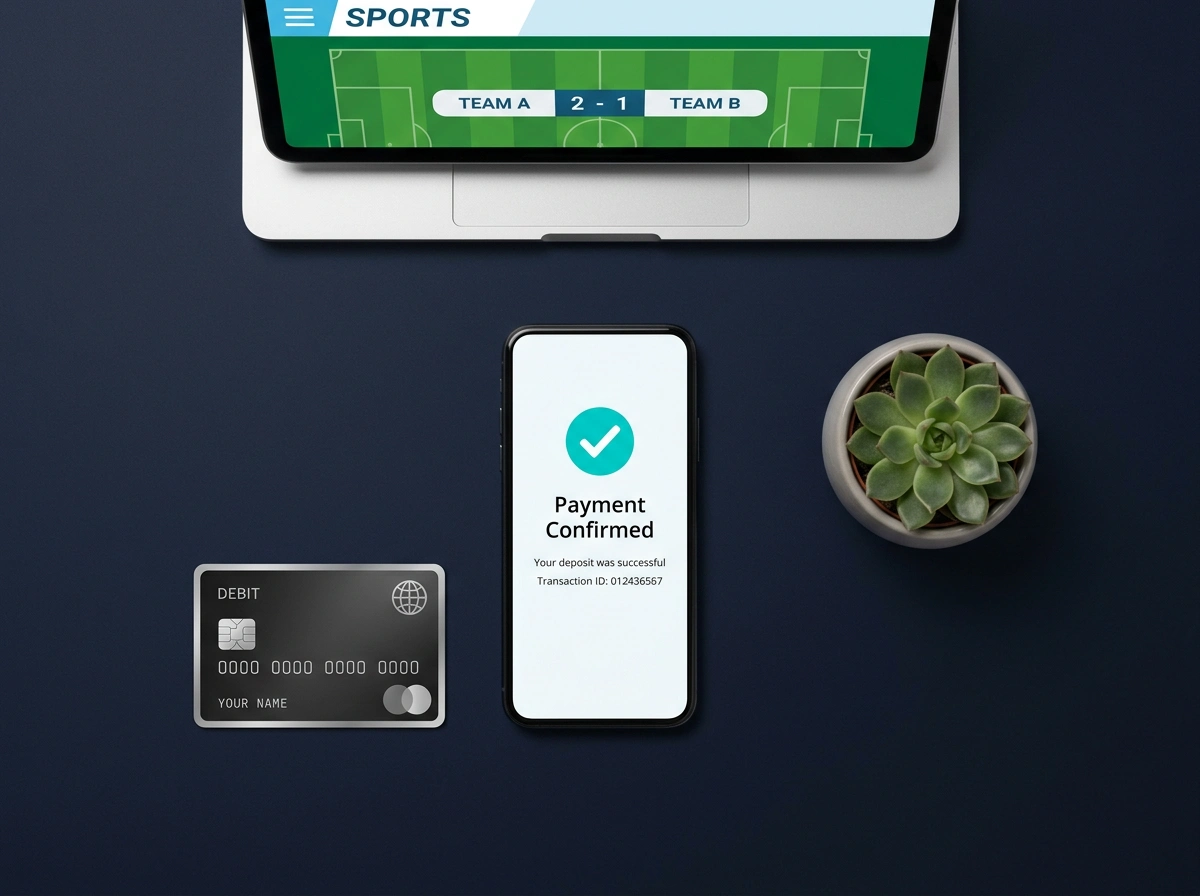
"Free to sign up" is the phrase every e-wallet leads with. And it's true — creating a MiFinity account costs nothing. But the actual cost of using the wallet for betting? That lives in the transaction fees, the currency conversion margins, and the sportsbook-side charges that nobody puts in the headline.
I've spent more hours than I'd like to admit mapping out fee structures across payment providers. With MiFinity, the cost picture depends on three variables: how you fund your wallet, whether currency conversion is involved, and what your sportsbook charges on its end. The global digital wallet market reached USD 56.77 billion in 2025 and is projected to hit USD 145.35 billion by 2030 — and competition in that space is gradually pushing fees downward, but "gradually" doesn't mean "free yet."
For Australian users funding via debit card, expect a fee in the range of AUD 1-2 per transaction. Bank transfers are typically lower or fee-free on the MiFinity side, though your bank may charge its own outgoing transfer fee. Peer-to-peer transfers within MiFinity can run up to AUD 10. Withdrawal fees for pulling money out of your MiFinity wallet tend to sit around the EUR 1 equivalent, though this varies by destination method.
Digital wallets already account for 31% of e-commerce payments in Australia — a figure from Worldpay's Global Payments Report that reflects growing comfort with the model. But comfort shouldn't mean complacency about costs. Currency conversion is where MiFinity's fees can compound. If your sportsbook operates in EUR or USD and your wallet holds AUD, each deposit involves a conversion at MiFinity's exchange rate, which includes a margin over the mid-market rate. That margin, typically a few percentage points, is invisible if you don't check — but on high-volume betting activity, it adds up. A detailed breakdown of every fee layer is available in the MiFinity fees guide.
Digital wallets handle 31% of all e-commerce payments in Australia — nearly a third of every online purchase. For betting deposits specifically, the share is growing faster because the credit card ban removed the most common alternative for punters who didn't want to use bank transfers.
The sportsbook side adds another layer. Some operators absorb deposit fees for e-wallet users as a customer acquisition incentive. Others pass through a processing charge, typically 1-3% of the deposit amount. Withdrawal fees on the sportsbook side are rarer but not unheard of. The only way to know what your specific operator charges is to check their payments page before you commit — a step I'm surprised how many bettors skip.
MiRewards, MiFinity's loyalty programme, introduces a partial offset. Points earned on transactions can accumulate toward benefits at higher tiers, though MiFinity hasn't published a precise points-to-AUD conversion that would let you calculate the exact fee reduction. Still, for regular bettors making weekly deposits and withdrawals, even a small percentage back on each transaction compounds over a season.
Fees are one dimension of cost. The other is opportunity cost — choosing a wallet that doesn't reach your preferred sportsbook, or one that charges more than its competitors for the same transaction. Stacking MiFinity against the incumbents makes that trade-off concrete.
MiFinity vs Other E-Wallets: Where It Stands
I've sat across from operators at industry conferences who treat all e-wallets as interchangeable. "We accept digital wallets" — as if that settles the question. It doesn't. The differences between MiFinity, Skrill, and Neteller are meaningful, and they affect everything from your deposit speed to the fees you'll absorb over a year of regular betting.
Start with market positioning. Skrill and Neteller are both owned by Paysafe Group, a publicly listed payments company with broad financial services reach. They've been in the iGaming space for over two decades and have the largest user bases. MiFinity is independently owned, smaller, and more narrowly focused on iGaming and adjacent sectors. That focus is both its strength and its limitation — the product is purpose-built for betting and gaming transactions, but it lacks the brand recognition that makes Skrill a default option at most sportsbooks.
Paysafe's own research found that 68% of online gamblers in the US preferred e-wallets over credit cards, citing security and transaction speed. That preference extends to Australia, where the credit card ban has made the question less about preference and more about necessity. The issue for Australian punters isn't whether to use an e-wallet — it's which one.
Kris Deyanov, MiFinity's Head of Business Development, framed the competitive landscape from the operator's perspective: operators relying on card payments face lower approval rates, issuer-driven declines, rising transaction costs, and exposure to chargebacks and fraud. Those are the problems e-wallets solve for operators — but each wallet solves them differently, at different price points, with different coverage.
| Feature | MiFinity | Skrill | Neteller |
|---|---|---|---|
| iGaming Focus | Primary business vertical | Major vertical among several | Major vertical among several |
| Regulation | FCA + MFSA | FCA (via Paysafe) | FCA (via Paysafe) |
| Loyalty Programme | MiRewards (4 tiers, launched Feb 2026) | Knect (points-based) | Neteller Rewards |
| eVoucher Option | Yes — available for wallet funding | No direct eVoucher equivalent | No direct eVoucher equivalent |
| Currencies Supported | 18 | 40+ | 26 |
| Countries Available | 225 | 120+ | 200+ |
The comparison that matters most for day-to-day use comes down to three things: where each wallet is accepted, what each one charges, and how fast withdrawals process. Skrill has the broadest sportsbook acceptance globally. Neteller is close behind. MiFinity's 1,200+ integrations represent serious coverage but still trail the Paysafe duo at most established bookmakers. On fees, the picture is more nuanced and depends heavily on your funding method and whether currency conversion is involved — the full side-by-side comparison digs into the numbers.

No single e-wallet is objectively "best" for all Australian bettors. MiFinity's strengths — iGaming specialisation, eVoucher support, MiRewards loyalty — make it the stronger pick for punters who value a purpose-built betting payment tool. Skrill and Neteller offer broader acceptance and multi-purpose utility beyond gambling. The right choice depends on how many sportsbooks you use, how often you convert currencies, and whether eVoucher anonymity matters to you.
Choosing a wallet is only half the equation. The sportsbook on the other end of the transaction determines whether that wallet actually delivers on its promises.
What to Look for in a MiFinity-Friendly Sportsbook
Last year I watched a mate deposit A$200 into a sportsbook that "accepted MiFinity" — only to discover at withdrawal time that MiFinity was deposit-only. His winnings had to go through a bank transfer that took seven days and cost him a flat fee. The sportsbook's payments page had technically listed MiFinity. It just hadn't mentioned the one-way restriction until he tried to cash out.
That's the gap between "accepts MiFinity" and "properly supports MiFinity." With over 1,200 brands integrated into the MiFinity ecosystem, the range of implementation quality is enormous. Some operators offer full two-way MiFinity support with instant deposits and same-day withdrawals. Others treat it as a checkbox item with slow processing and hidden restrictions. Here's what I look for when evaluating whether a sportsbook genuinely supports the wallet.
Before Your First MiFinity Deposit — Check These
- Confirm that MiFinity is listed for both deposits AND withdrawals — not just deposits
- Check the minimum and maximum deposit amounts for MiFinity specifically (they may differ from card limits)
- Verify the sportsbook's gambling licence through the relevant regulator's public register
- Read the payments FAQ or T&Cs for any MiFinity-specific processing fees or delays
- Confirm whether the sportsbook operates in AUD or requires currency conversion
- Check whether e-wallet deposits qualify for any welcome bonuses (some sportsbooks exclude them)
- Look for the sportsbook on BetStop's operator list if you want licensed-only platforms
Licensing is the non-negotiable starting point. A staggering 44% of active online gamblers in Australia cannot distinguish a licensed bookmaker from an illegal offshore site — a figure that should alarm anyone in this industry. The guide to MiFinity betting sites in Australia covers how to evaluate specific operators, but the core principle is simple: if the sportsbook doesn't hold a licence from a recognised jurisdiction, the consumer protections you rely on don't exist.
Verification tip: Every Australian state and territory gambling regulator publishes a list of licensed operators. Northern Territory Racing Commission and the Interactive Gambling Act's register are the primary sources. If you can't find a sportsbook on any regulator's public list, treat that as a red flag — not a research challenge.
The offshore question looms large here. Australia's illegal offshore gambling market runs at roughly USD 2.5 billion annually, with 36% of all online gambling flowing through unlicensed operators. Australians lose an estimated AU$3.9 billion each year on these platforms. Half of all Australians betting on offshore sites are registered with BetStop — meaning they self-excluded from licensed platforms and went looking for alternatives that wouldn't check. Kai Cantwell, CEO of Responsible Wagering Australia, put it sharply: ensuring Australia's onshore market stays competitive is essential, because if people can't find the products or prices they want here, they don't stop gambling — they just go offshore.
MiFinity's presence at both licensed and unlicensed operators means the wallet itself isn't a seal of legitimacy. The payment method is agnostic — it processes transactions regardless of the operator's licensing status. That makes your own due diligence the only reliable filter.
Beyond licensing, look at the sports coverage. Horse racing at 37.9% of revenue and fixed-odds formats at 41.6% dominate the Australian market. If your sportsbook doesn't offer deep racing markets or competitive fixed-odds pricing, it's probably not built with Australian punters in mind — regardless of what payment options it lists. AFL, NRL, cricket, and increasingly esports round out the coverage expectations.
Mobile integration quality is the final filter. With the 18-24 demographic driving growth and the majority of online gambling happening on mobile, a sportsbook that doesn't offer smooth MiFinity transactions from a phone browser or app is leaving friction in the payment flow — friction that costs conversions and costs you time.
Responsible Gambling Tools and MiFinity Safeguards
The Lancet Public Health Commission on Gambling published a figure in 2024 that I keep coming back to: roughly 450 million people worldwide experience gambling-related harm, with approximately 80 million meeting criteria for gambling disorder. Those aren't abstractions. In Australia, the proportion of at-risk gamblers climbed from 13.7% to 19.4% in a single year. Faster payments and frictionless deposits are genuine improvements to the betting experience — but they also remove speed bumps that, for some punters, served as informal cooling-off periods.
I want to be direct about this: a payment analyst's job is to evaluate transaction efficiency, but I'd be irresponsible to write about MiFinity's deposit speed without addressing the tools designed to slow things down when they need to be slowed down.
BetStop is Australia's national self-exclusion register. Once you register, all licensed Australian gambling operators are required to close your accounts and refuse future registrations. Lifetime self-exclusion is the most popular choice among registrants at 39%, followed by periods of three months to two years at 38%. Registration is free and can be done online at any time.
BetStop works at the operator level, which is both its strength and its limitation. Licensed sportsbooks must check the register and block registered users. But BetStop doesn't extend to offshore operators, and — as the data shows — 50% of Australians gambling on offshore sites are BetStop registrants who went looking for unblocked access. This is not a flaw in BetStop's design; it's a reflection of how determined problem gambling behaviour can be.
On the wallet side, MiFinity offers deposit limits and spending controls that you can configure within your account settings. These aren't gambling-specific responsible play tools in the way that operator-side loss limits or session timers are — they're financial controls on the wallet itself. Setting a daily or weekly deposit cap inside MiFinity means that even if you open a new sportsbook account, the wallet won't let you fund it beyond your self-imposed limit. That's a layer of protection that card-based deposits don't offer, because card limits are set by the bank, not by you in the context of gambling.
Important: If you or someone you know is experiencing gambling-related harm, support is available. Gambling Help Online and the National Gambling Helpline provide free, confidential counselling for Australians.
The Lancet Commission's lead authors called for a sustained effort to apply public health logic to gambling harm — a framework that treats problem gambling not as a personal failing but as a population health issue with structural contributors. Payment providers sit inside that structure. The speed and convenience that make MiFinity attractive for recreational bettors are the same features that can accelerate harm for vulnerable users. Recognising that duality — and acting on it by using the available controls — is part of betting responsibly.
I track the BetStop numbers each quarter, and the 4,971 new registrations in Q3 2025-26 alone tell me that self-exclusion remains an actively used tool. It's not perfect. It doesn't cover offshore. But for licensed-market betting, it's the most concrete safety net available, and it works alongside e-wallet controls to create a double layer of friction for people who need it.

Frequently Asked Questions
What is MiFinity and how does it work for online betting in Australia?
MiFinity is an FCA-regulated digital wallet that acts as an intermediary between your bank account and online sportsbooks. You create a MiFinity account, verify your identity through KYC checks, load funds via debit card, bank transfer, or eVoucher, and then deposit those funds into your chosen sportsbook. When you withdraw winnings, the money returns to your MiFinity wallet first, then you transfer it to your bank. The wallet supports AUD among 18 currencies and is available through both a web interface and a mobile app on iOS and Android. For Australian bettors, its primary value is speed (near-instant deposits once funded), privacy (sportsbooks don't see your bank details), and flexibility (one wallet, multiple sportsbooks).
Is MiFinity safe and legal for Australian bettors?
MiFinity holds dual regulatory authorisation from the UK's Financial Conduct Authority and Malta's MFSA, which means it must comply with strict capital adequacy, client fund segregation, and anti-money-laundering standards. It also maintains PCI DSS Level 1 certification and ISO 27001 accreditation for information security. Using MiFinity to deposit at a licensed Australian sportsbook is legal. The wallet itself is a legitimate payment instrument — the legality question depends on whether the operator you're betting with holds a valid gambling licence, not on the payment method.
What are the deposit and withdrawal limits with MiFinity at sportsbooks?
MiFinity applies its own transaction limits based on your verification tier. Unverified accounts face lower cumulative limits (approximately EUR 2,000 equivalent), while fully verified accounts operate at substantially higher ceilings (EUR 10,000+). However, the sportsbook you're depositing with sets its own separate limits — minimum deposits across Australian-accessible sites typically range from A$5 to A$30, and maximum single deposits vary widely by operator. Withdrawal limits are similarly layered: the sportsbook may cap how much you can withdraw per day or per transaction, independently of MiFinity's own limits.
Can I use MiFinity for live in-play betting?
You can deposit via MiFinity and place live bets at sportsbooks that offer in-play markets. However, Australian law restricts online in-play betting to telephone-based wagers for domestic licensed operators — online click-to-bet in-play is not permitted at licensed AU sportsbooks. Some offshore operators offer full online in-play betting, but using them carries legal and consumer protection risks. The practical approach is to pre-fund your sportsbook account via MiFinity before the event starts, so your funds are ready when live markets open — whether by phone or through whatever in-play options your operator provides.
Does MiFinity support AUD for betting deposits?
Yes. AUD is one of the 18 currencies MiFinity supports. You can hold an AUD balance in your MiFinity wallet and deposit directly to sportsbooks that operate in AUD without any currency conversion. If your sportsbook operates in a different currency — EUR or USD, for example — MiFinity will convert your AUD at its exchange rate, which includes a margin over the mid-market rate. To avoid conversion costs, prioritise sportsbooks that accept AUD natively.
What is MiRewards and do I earn points when betting?
MiRewards is MiFinity's loyalty programme, launched in February 2026 with four tiers: Classic, Exclusive, Signature, and Elite. You earn points on transactions processed through your MiFinity wallet, including deposits to and withdrawals from sportsbooks. Higher tiers unlock progressively better benefits. The programme is automatic — you don't need to opt in beyond having a MiFinity account. Whether the rewards meaningfully offset your transaction fees depends on your volume, but it's a feature that neither Skrill nor Neteller matches in exactly the same form.
How does MiFinity compare to Skrill and Neteller for Australian sports betting?
Each wallet has distinct advantages. Skrill offers the broadest sportsbook acceptance and the most currencies (40+). Neteller sits between the two in reach and has long-established gambling industry relationships. MiFinity is the most iGaming-focused, offers a unique eVoucher funding option, and has the newest loyalty programme in MiRewards. MiFinity's 1,200+ brand integrations trail Skrill's and Neteller's broader networks, but its dedicated gaming infrastructure means faster feature development for betting-specific needs. Fee structures vary by funding method and currency — the right choice depends on which sportsbooks you use and how you prefer to fund your wallet.
