
 Available in US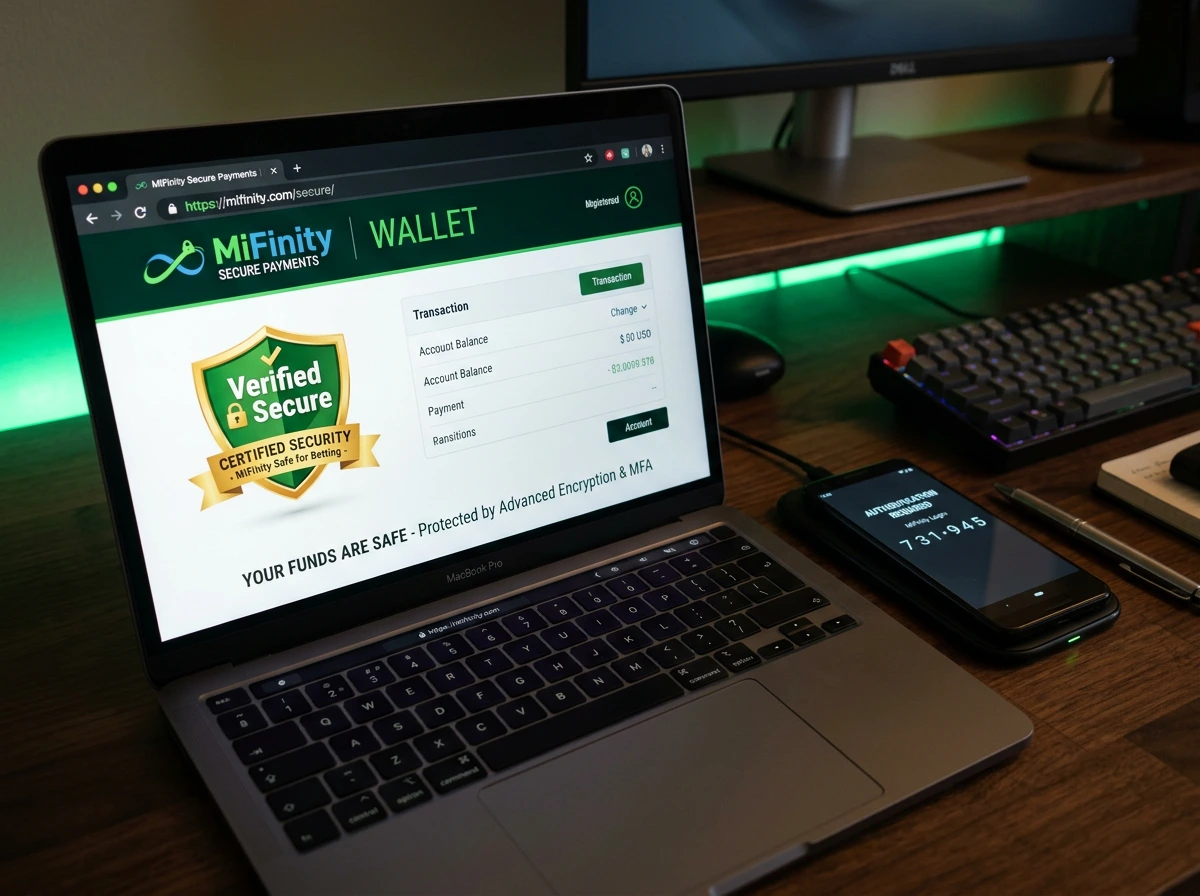
Contents
Security Questions Every Bettor Should Ask About a Payment Provider
44% of active Australian online gamblers cannot tell the difference between a licensed bookmaker and an illegal offshore site. That statistic – from H2 Gambling Capital research in 2025 – should make any punter pause before trusting a payment provider with their money. If nearly half the market struggles to verify a sportsbook’s legitimacy, how many are checking whether their e-wallet is properly regulated? In my experience: almost nobody, until something goes wrong.
Every payment provider claims to be “safe” and “secure” on their homepage. Those words are marketing, not evidence. The questions that actually matter are specific: who licenses this company? What encryption standards protect my data? What happens to my funds if the provider becomes insolvent? And how does the company handle disputes when a transaction fails? I have spent nine years auditing payment providers for iGaming operators, and the answers to these questions vary wildly across the e-wallet market. MiFinity’s answers are worth examining in detail.
68% of online players in the United States already prefer e-wallets over credit cards for gambling transactions, citing security and speed as the primary reasons. Australian punters are following the same trajectory, especially after the June 2024 credit card ban. But preference alone is not a safety assessment. Let me walk through what actually backs MiFinity’s security claims.
FCA and MFSA Licensing: What They Actually Guarantee
MiFinity holds licences from two European financial regulators: the UK’s Financial Conduct Authority and Malta’s Financial Services Authority. These are not cosmetic badges. Each licence imposes specific operational requirements that directly affect your money’s safety.
The FCA licence means MiFinity must segregate customer funds from operational capital. In practical terms, the money sitting in your MiFinity wallet is not mixed with the company’s business expenses, salaries, or debts. If MiFinity faced financial difficulty, those segregated funds would be protected from creditors. This is the single most important safeguard for any bettor holding a balance in an e-wallet, and it is a requirement many smaller payment providers fail to meet because they are not licensed at this level.
The MFSA licence governs MiFinity’s operations within the European Economic Area and extends the regulatory framework to cross-border transactions. For Australian users, this matters because your AUD deposits often pass through European payment infrastructure. The MFSA imposes anti-money laundering requirements, transaction monitoring, and reporting obligations that add another compliance layer to every transaction MiFinity processes.
Both regulators conduct ongoing supervision – this is not a one-time approval. MiFinity must submit regular reports, undergo audits, and maintain capital adequacy ratios. Losing either licence would effectively end the company’s ability to operate in regulated markets. That existential incentive aligns MiFinity’s interests with yours: keeping your funds safe is not just good ethics, it is a business survival requirement.
PCI DSS Level 1, ISO 27001, and Strong Customer Authentication
I remember reviewing a payment processor in 2019 that proudly advertised “bank-grade encryption” on its website. When I asked for their PCI DSS compliance certificate, they went quiet. “Bank-grade” meant nothing – it was a phrase designed to sound impressive while committing to no verifiable standard. MiFinity takes a different approach by holding actual, auditable certifications.
PCI DSS Level 1 is the highest tier of the Payment Card Industry Data Security Standard. It requires annual on-site assessments by a qualified security assessor, penetration testing, continuous network monitoring, and strict access controls on cardholder data. Level 1 applies to entities processing over six million card transactions annually, which tells you something about MiFinity’s transaction volume and the scrutiny it receives.
ISO 27001 certification covers MiFinity’s broader information security management system. It means the company has a documented, independently audited framework for managing data security risks – from employee access policies to incident response procedures. This is not a self-assessment; it requires third-party verification and regular recertification.
Safety starts with proving who you are: the verification check. Strong Customer Authentication adds a user-facing security layer. When you authorise a transaction through MiFinity, the system requires at least two independent authentication factors – typically something you know (a password or PIN) and something you have (your phone for a one-time code or biometric verification). This means that even if someone obtains your MiFinity password, they cannot complete a transaction without your second factor. For bettors managing wallets with meaningful balances, SCA is the front-line defence against unauthorised access.
How MiFinity Handles Fraud and Disputes
Security certifications protect against systemic risks. But what happens when something goes wrong on an individual transaction? A deposit that disappears between your wallet and a sportsbook. An unauthorised withdrawal you did not initiate. A sportsbook that refuses to process your cashout. These scenarios are where a payment provider’s dispute resolution process matters more than any certificate hanging on the wall.
MiFinity operates a dedicated support team for transaction disputes, accessible through the wallet’s interface and via email. When you report an issue, the company can trace the transaction through its payment rails and provide evidence of whether funds reached the merchant or were held at an intermediate stage. This transaction transparency is one advantage of e-wallets over direct bank transfers, where tracing a failed payment often requires coordination between multiple banking institutions.
For unauthorised transactions, MiFinity’s SCA framework is the first defence, but the company also monitors for unusual activity patterns – rapid successive withdrawals, logins from unfamiliar locations, or deposits to newly added merchants. If suspicious activity is detected, transactions can be frozen pending verification. That system occasionally creates friction for legitimate users who travel or change devices, but it exists to protect your balance rather than to inconvenience you.
One honest caveat: MiFinity’s dispute resolution is between you and MiFinity. If your dispute is with the sportsbook – for example, if an operator refuses to pay out a winning bet – MiFinity can confirm that the deposit was delivered, but it cannot force the operator to release funds. Payment provider and sportsbook disputes operate in separate lanes. For a deeper look at MiFinity’s eWallet features and how the platform positions itself relative to competitors, I have covered that in a separate piece.
Is my money protected if MiFinity goes bankrupt?
MiFinity's FCA licence requires segregation of customer funds from company operational capital. This means your wallet balance is held separately and would be protected from MiFinity's creditors in an insolvency scenario. This segregation requirement is one of the key protections enforced by the FCA.
What fraud protections does MiFinity offer for betting transactions?
MiFinity uses Strong Customer Authentication requiring two independent verification factors for every transaction, automated monitoring for unusual activity patterns, and the ability to freeze suspicious transactions pending review. The company also holds PCI DSS Level 1 certification for payment data security.
Has MiFinity ever had a data breach?
As of 2026, MiFinity has not publicly disclosed a data breach. The company maintains ISO 27001 certification for its information security management system, which requires documented incident response procedures and regular third-party audits. No system is immune to risk, but the certification framework is designed to minimise and rapidly address vulnerabilities.
The rest of the route starts in our complete guide for Australian punters.
