
 Available in US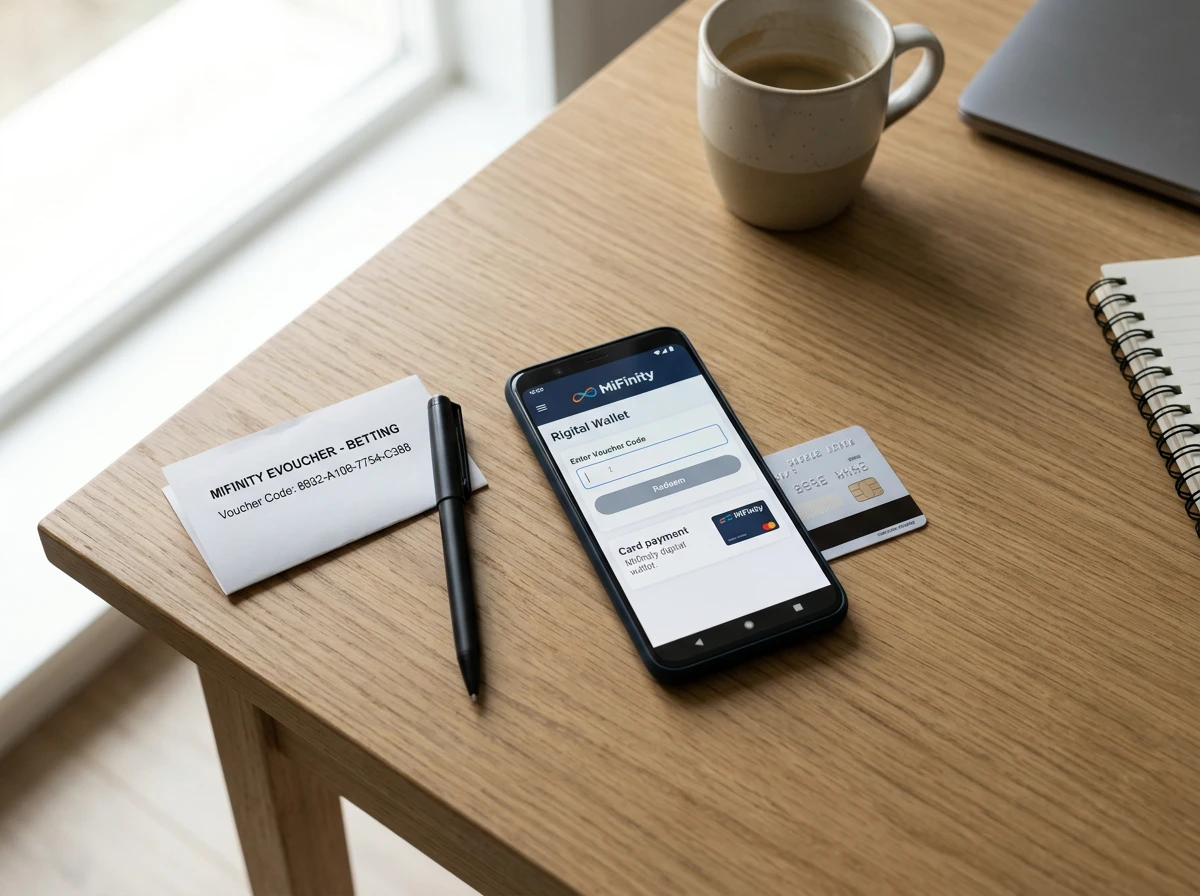
Contents
eVouchers Explained: Betting Without Linking a Bank Card
When Australia banned credit card use for online gambling on 11 June 2024 – with penalties reaching up to $247,500 for operators who violate the rule – a lot of punters suddenly needed a Plan B. Some moved to debit cards. Some discovered e-wallets for the first time. But a smaller, privacy-conscious group found a third path: MiFinity eVouchers. As Communications Minister Michelle Rowland put it at the time, “Australians should not be gambling with money they do not have.” The ban targeted borrowed funds, and eVouchers fit comfortably within the new rules because they represent money you have already spent upfront.
An eVoucher is a prepaid code – a string of characters you purchase with real money and later redeem into your MiFinity wallet or directly at a supported sportsbook. No bank account linked to the transaction at the betting end. No card details shared with the operator. The voucher acts as a buffer between your financial identity and your betting activity. I have recommended this approach to clients who want a clean separation between their banking and their wagering, and it works exactly as advertised. Why anyone bothers is answered by transaction privacy.
The concept is simple, but the execution matters. Buying the wrong denomination, purchasing from an unauthorised reseller, or misunderstanding the withdrawal limitations can turn a straightforward deposit method into a frustration. Over nine years of advising on payment integration, I have seen every eVoucher mistake there is. This guide covers the practical details so you avoid repeating them.
Where and How to Purchase MiFinity eVouchers in Australia
Buying a MiFinity eVoucher is not like picking up a gift card at the supermarket checkout. The process is online, and the distribution network runs through authorised resellers and MiFinity’s own platform. You pay for the voucher using a method of your choice – debit card, bank transfer, or another e-wallet – and receive a unique voucher code via email or within the reseller’s account dashboard.
MiFinity’s eWallet is available in 225 countries and supports 18 currencies, so AUD-denominated vouchers are accessible to Australian users. The denominations available depend on the reseller, but common amounts range from modest sums suitable for casual bets to larger values for punters who want fewer top-ups across a season. When purchasing, pay attention to the currency denomination – buying a EUR voucher when you intend to deposit in AUD means you will absorb a conversion fee when you redeem.
A few practical notes from my testing: always purchase from authorised channels. Third-party marketplaces and forum sellers occasionally list MiFinity vouchers at discounted rates, but those codes can be stolen, expired, or region-locked. If a voucher fails to redeem, recovering your money from an unauthorised seller is effectively impossible. Stick to the official distribution network, even if it costs a few dollars more.
Redeeming an eVoucher at a Sportsbook
Redemption follows one of two paths depending on the sportsbook’s integration. Some operators let you enter the eVoucher code directly at the cashier – you select MiFinity eVoucher as your deposit method, paste the code, and the funds land in your sportsbook balance. Others require you to redeem the voucher into your MiFinity wallet first, then deposit from the wallet to the sportsbook as a standard MiFinity transfer.
The wallet-first route adds one extra step but gives you more flexibility. Once funds sit in your MiFinity wallet, you can split them across multiple sportsbooks, hold a reserve balance, or convert currencies before depositing. The direct-redemption route is faster for a single deposit but locks the entire voucher value into one operator.
In either case, the redemption itself is quick. Enter the code, confirm the amount, and the funds are available within seconds. There is no bank clearing delay, no card authorisation check, and no additional KYC triggered by the voucher itself – although the sportsbook or your MiFinity account may have their own verification requirements depending on your transaction history.
One thing I always tell punters: screenshot or save the confirmation receipt after redemption. If the funds do not appear immediately at the sportsbook due to a processing hiccup, that receipt is your proof of transaction and speeds up any support inquiry considerably. For a full walkthrough of the MiFinity deposit process at sportsbooks, including wallet-based deposits, I have covered each step separately.
eVoucher Limitations: What You Cannot Do
No payment method is perfect, and eVouchers come with trade-offs that I want to be upfront about. The biggest limitation: you cannot withdraw winnings to an eVoucher. Withdrawals from a sportsbook must go to your MiFinity wallet or another supported method. If you deposited via a direct eVoucher redemption without a full MiFinity account, you will need to set up a wallet account before you can cash out. This catches some first-time users off guard.
Second, eVouchers are single-use. Once redeemed, the code is spent. Partial redemptions are generally not supported – if you buy a $100 voucher and only want to deposit $50, you cannot split the code. The full amount goes in, and you manage the remainder from your wallet. That fixed-denomination structure means you need to plan your purchases to match your intended deposit amounts reasonably closely.
Third, availability can vary. Not every reseller stocks every denomination in every currency at all times. During peak betting periods – Melbourne Cup week, AFL Grand Final, State of Origin – popular denominations can sell out at some resellers. Buying your vouchers a few days ahead of major events avoids this problem entirely.
Finally, eVouchers do not earn MiRewards points at the point of purchase. The loyalty programme tracks transactions within the MiFinity wallet ecosystem, and buying a voucher from a reseller happens outside that loop. If you redeem the voucher into your wallet and then deposit to a sportsbook, the wallet-to-sportsbook transfer may qualify for rewards, but the initial purchase does not. For punters who prioritise maximising loyalty benefits, direct wallet funding via card or bank transfer is the more efficient path.
None of these limitations make eVouchers a bad option – they make them a specific option. If privacy and pre-commitment are your priorities, the trade-offs are reasonable. If flexibility and reward optimisation matter more, a standard MiFinity wallet deposit may serve you better. Knowing the boundaries before you buy your first voucher is the entire point.
Can I withdraw winnings to a MiFinity eVoucher?
No. MiFinity eVouchers are a deposit-only method. Withdrawals from sportsbooks must go to your MiFinity wallet, a bank account, or another supported withdrawal method. You will need a verified MiFinity wallet account to receive any winnings.
Do eVouchers expire if unused?
MiFinity eVouchers carry an expiry date set at the time of issue. The specific validity period depends on the reseller and the voucher terms, so check the expiry details when you purchase. Unredeemed vouchers past their expiry date lose their value.
Are there denomination limits for MiFinity eVouchers in AUD?
Available denominations vary by reseller. Common AUD amounts range from small values suitable for casual deposits to larger sums for regular bettors. Check the specific reseller's listing for current AUD denomination options, and buy ahead of peak periods when popular amounts can sell out.
The full picture is in our complete guide for Australian punters.
